Do Consumer Boycotts Work?
Not so much, a University of Iowa study reports. Plus: Buc-ees vs. Wally's; Casey's adds to Texas collection; and a vote nears for Deere workers.

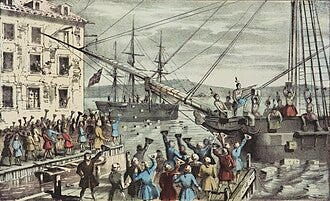
In December 1773, members of the Sons of Liberty snuck onto ships in Boston Harbor and dumped 342 crates of British East India Co. tea into the water.
Huzzah! This audacious raid successfully ruined the tea and called attention to the American colonists’ protest against overbearing British taxation policy.
Oops, hold the huzzahs! The colonists’ heroics prompted immediate and harsh payback from the British, who imposed more severe taxation and heavy-handed martial rule in the colonies. Ultimately, it took a revolution and war for colonists to gain independence 250 years ago, in 1776.
Ever since the Boston Tea Party, consumer boycotts have been a way of life in America to protest perceived injustice and discrimination.
Taking on Big Brands
In recent years, consumer boycotts have spread like measles, infecting enterprises of all sizes — from small businesses to Fortune 500-sized corporations. Amazon, Anheuser-Busch, Chik-Fil-A, Home Depot, Target, and Tesla are just some of the heavyweights that have been in the crosshairs of “don’t buy” blackball campaigns.
The good news for Target and other retailers marked for consumer boycotts: These campaigns rarely have much impact. By and large, they run out of steam fast.
The bad news: There are exceptions. And Target is one of them.
These were conclusions by the University of Iowa’s Danye Wang, assistant professor of accounting at the Tippie College of Business, after her research of consumer boycotts.
Her study was conducted with Svenja Dube of Baruch College in Manhattan, N.Y., and Hye Seung Lee of Fordham University in the Bronx, N.Y. They examined whether retail consumers changed shopping in response to negative environmental, social, and governance (ESG) news about retailers.
Tracking Foot Traffic
To track shopping patterns, the researchers relied on the data company SafeGraph in Denver to measure foot traffic.
That data “provides daily visit counts to more than 4 million brick-and-mortar retail locations in the United States,” the study noted, and the “visit counts” were based on 46 million mobile devices — smartphones — in the United States.
Wang’s team examined any foot-traffic changes after “negative ESG news” surfaced. The bad news was chronicled by RepRisk, a data science company headquartered in Zurich, Switzerland.
The study’s conclusion: “We do not find significant changes in consumer foot traffic around negative ESG news events, on average.” Even in an instance when business does slide as a result of negative ESG news, the impact typically “lasts only a few weeks after the incident,” the study said.
Nonetheless, another study, published in the Multidisciplinary Reviews Journal, said up to 42 percent of multinational corporations and 54 percent of top brands have faced boycotts.
Warnings on “Material” Risks
Consumer boycotts can in fact jeopardize financial performance. With that in mind, the U.S. Securities and Exchange Commission requires publicly held corporations to warn investors of any “material” risks. Forms filed with the SEC caution investors that negative publicity can change consumer behavior, including the creation of consumer boycotts.
Oftentimes consumer boycotts are motivated by ethical, political, religious, or environmental concerns.
Recently, many campaigns were linked to protests against the policies of President Donald Trump. For example, Amazon, Home Depot, Palantir, Tesla and Walmart all rolled back policies on diversity, equity and inclusion, after Trump spoke against DEI policies.
Tesla further fanned the flames because of Chief Executive Officer Elon Musk’s close alignment with the president. Trump, early in his second term, tabbed Musk to run the Department of Government Efficiency. The DOGE initiative discharged or displaced thousands of federal workers.
Then there is Target Corp. The Minneapolis-based retailer with the red bullseye logo became a poster boy for shopper outrage. The controversy demonstrated how issues such as DEI are highly divisive among consumers, with positive and negative consumer response frequently offsetting each other.
In 2023, Target rolled out a Pride Month Collection that included LGBTQ-themed clothing and merchandise.
Hearing it From Both Sides
That incurred the wrath of conservative political and parent groups, including nationwide boycotts of Target. Target sales took a hit.
In early 2025, Target said it was rolling back its diversity, equity and inclusion policies because it had met its three-year DEI goals. That caused an uproar from the Lesbian, Gay, Bisexual, Transgender, and Queer rights groups. Again, Target’s business took a beating.

This year, Target seems to have regained its footing. The company reported surprisingly stronger financial results for the first quarter of 2026, with improved income and earnings.
A coalition of activist groups ended a “Target Fast” boycott of the company. Michael Fidelke, an Iowa native and Target’s new chief executive officer, renewed the company’s commitment to Black-owned businesses, supplier diversity and historically Black colleges, Forbes magazine reported.
Wang, in an interview, acknowledged that her study isn’t perfect. The data “only captures the store visits and the store spending.” While many consumers “vote with their feet,” there are many others who let their fingers do the shopping online.
Even consumers who stop visiting retailers “will come back very soon,” she said. “I think overall our finding is that even for those who really respond, after six or seven weeks they will come back. They will forget the bad things that the company has done.”
Fact is, customer shopping habits are entrenched and can be difficult to change, Wang said. Besides, the number of boycotting consumers can be offset by new consumers shopping in the store.
Bud Light Brouhaha
The wounds still seem fresh, however, for Anheuser-Busch and its popular beer brand Bud Light.
A widely publicized boycott against Bud Light began in 2023 after transgender influencer Dylan Mulvaney posted a video showing a personalized can of Bud Light. It was a celebration of her first year of being a woman.
Conservative politicians and celebrities lashed out against the brand and Anheuser-Busch disavowed itself from the campaign. Those reactions, in turn, sparked criticism from LGBTQ advocates.
Both Target and Bud Light demonstrate how social issues can be highly divisive among consumers, with positive and negative consumer response frequently offsetting each other.
“Retail is being shaped less by convenience alone and more by values, identity and digital behavior,” said a 2026 report by Numerator, a Chicago-based consumer insights company. “Political and social stances now carry measurable commercial consequences.”
Numerator found that 38 percent of U.S. consumers participated in at least one product, brand or store boycott in the past year, the website Progressive Grocer reported. Also, 48 percent said they would stop buying from a company with incompatible social or political stances, the report said.
One thing’s for certain: Social media has provided an easily accessible launching pad for these campaigns to take off. No professional accreditations are required for critics to establish themselves as social media influencers.
Let’s just hope Artificial Intelligence keeps its synthetic mitts off our beer and tea.
Biz Whisper Updates
Jilted by Buc-ee’s, Norwalk May Court Wally’s
One year ago the mayor and city economic development team of Norwalk were making a case for the Buc-ee’s convenience store chain of Texas to build a store on the outskirts of their city, along Interstate 35.
On Monday night it was learned Buc-ee’s is indeed eyeballing a site in Iowa along I-35.
But it’s in Urbandale, not Norwalk.
“We’re disappointed,” Norwalk Mayor Tom Phillips said Tuesday in a telephone interview, “but I’m glad Buc-ee’s is coming to Iowa and to our metro area.”
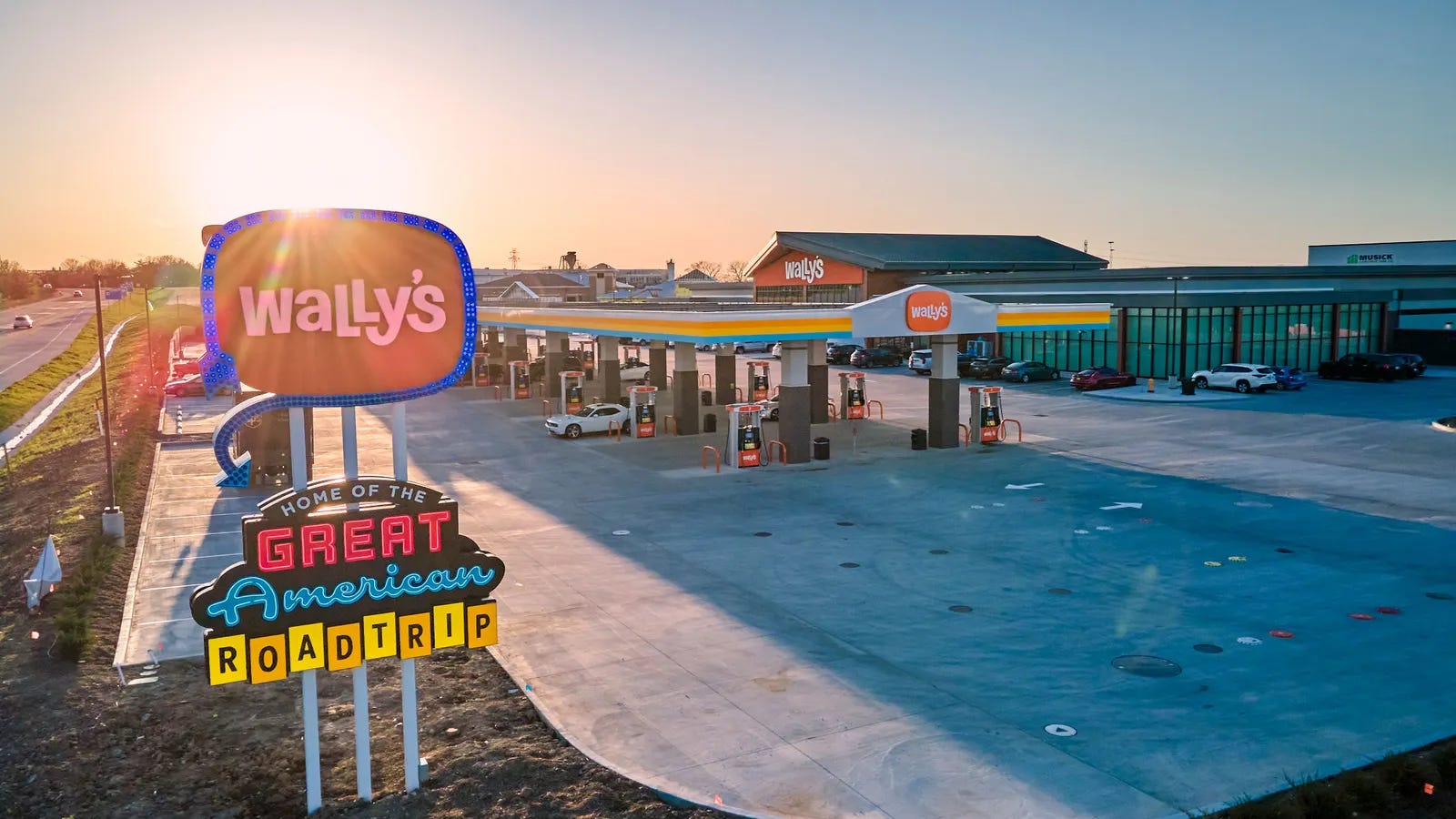
As for Norwalk’s site, the mayor said city officials will explore the possibility of attracting another travel center company, Wally’s. Wally’s bills itself as “home of the great American road trip,” with dozens of fuel pumps, electric charging stations, immaculate restrooms, spacious parking and unique food and merchandise.
So far, Wally’s has three locations: Pontiac, Ill.; Whitestown, Ind.; and Fenton, Mo.
Casey’s Adds Pak-A-Sak to Texas Portfolio
Ankeny-based Casey’s General Stores will continue its growth mode in Texas with the acquisition of 24 stores from Pak-A-Sak.
Terms were not disclosed.
The website C-Store Dive reported most of the sites are in the Amarillo area. Others are in nearby Panhandle cities, or farther south in Lubbock.
Date Set for UAW-Deere Vote
As reported earlier, Deere & Co. in July proposed a two-year contract extension to employees represented by the United Auto Workers.
Deere said it understands a vote on its contract offer is scheduled for later this month, on Aug. 23.
The existing collective bargaining agreement, which covers more than 10,000 workers, is scheduled to expire in fall 2027.
“With agricultural equipment demand down and the outlook uncertainties, we’ve proposed an extension now to provide greater continuity and certainty for employees, the business, and our customers,” Deere said in a prepared statement.
Deere said it made clear that it was “not looking to engage in early negotiation. Despite that, the UAW made a counteroffer that significantly exceeds our proposal — by roughly half a billion dollars.”
Thanks for reading! This column is part of a fast-growing collection of reporting and writing from Iowa writers. Check out their work at the Iowa Writers’ Collaborative.
Biz Whispers is an independent, reader-supported column. There is no paywall here — you can receive new posts and support my work by becoming a free subscriber. However, good journalism requires time and money. Please kindly consider becoming a paid subscriber if you’d like to help keep the lights on.